
Team Culture Part 2: Value Alignment
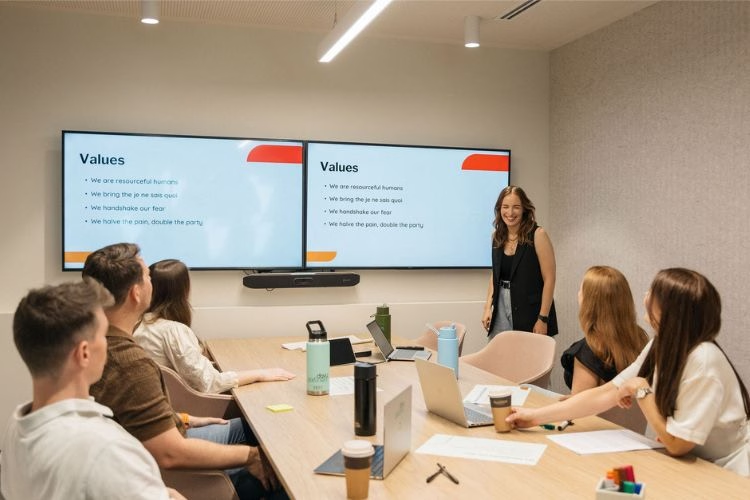
If you missed our first part of our culture series, you can catch up here. We talked about the four key drivers of workplace culture: Value alignment, Leadership, Safety climate, Trust and respect.
In this part, we’re zooming in on value alignment. Team values play a huge role in shaping culture they set the tone for how your team works, collaborates, and grows together.
When it comes to how they influence culture, we look at:
- Do you have clear values?
- Do the things that you ask people to do align with those values?
- And do the things that your team actually do align with those values?
Getting clear on values
Team values aren’t just stated, they’re felt. They show up in how people interact with each, how decisions are made, and how work actually gets done.
Communicating your values can help get everyone on the same page. The values you choose can be aspirational, and reflect the kind of culture you’re working toward, even if you’re not 100% there yet. They create a shared language and give you a reference point. When values are clear, it’s easier to have open conversations and ask: “Does X align with Y value?”
When it comes to values, leaders set the standard. The team will take cues from what’s demonstrated, not what’s written. So, if you’re not modelling the behaviours that you’d like for your team, your values can quickly lose credibility.
Are you really encouraging and supporting behaviours that match your values?
The second part can be a little trickier and is where most businesses fall flat. These days, people see through cliché culture statements. If there is little action to back them up, then they aren’t worth the paper (or flashy wall decal) they’re written on!
Modelling values through action
We’ve all heard businesses talk about promoting a culture with “work–life balance”. If it’s genuinely something you value, leaders need to model it too. A great example of this comes from Robbert Rietbroek, CEO of PepsiCo Aust and NZ, where he implemented a policy called ‘Leaders Leaving Early’. The idea is simple: leaders visibly and openly leave work at reasonable times, and explain why. He has been quoted:
“if I occasionally go at 4pm to pick up my daughters, I will make sure I tell the people around me, ‘I’m going to pick up my children.’ Because if it’s okay for the boss, then it’s okay for middle management and new hires.”
Mr Rietbroek said if you are “younger or more junior, you need to be able to see your leaders go home, to be comfortable to leave”.
When things don’t align
An organisation might state that it values respect, humility, and collaboration, while unknowingly rewarding behaviours that promote competition and individual success at the expense of the team. This misalignment can quietly undermine culture.
A common example is pay review processes. Many businesses don’t realise they have a “don’t-ask, don’t-receive” salary review system, where increases are only given to employees who ask for them (or indicate they might leave if they aren’t paid more). While often unintentional, these situations convey that the business values self-promotion, assertiveness, and individualism. Over time, they’re more likely to end up with a team that aligns with those values, even if it was unintentional.
On the flipside, having transparency around pay review processes and a measurable criteria to support pay decisions signals that rewards are based on capability and contribution. To take it a step further, your “criteria” might also reference skills like open communication to back up and promote collaboration.
Attracting and retaining the people who align with your values
Once your values are clear and reflected in how you operate, the final step is attracting and keeping people who align with them.
Recruitment, selection, and retention are big topics in their own right (and more than we can cover here), but values can and should play a role in all three. When values are embedded into how you hire, develop, and recognise people, they move from being words to something your team actually experiences.
This can look like including values referenced in position descriptions, discussing them during interviews, and weaving them into performance and development conversations. These touchpoints help reinforce expectations, guide growth, and ensure values aren’t just talked about, they’re built into how people can succeed.
Next in this series we're covering Leadership. Don’t want to miss the next part in the series? Sign up to email list here.
Get in touch with our team of Resourceful Humans! Book a free call with one of our HR partners to find out how we can help.

Kateena is a HR leader who partners with organisations and leadership teams to create environments where people can do their best work. With experience across complex employee relations and organisational strategy, she is known for balancing commercial goals with genuine care for people. Kateena is passionate about empowering leaders and delivering practical people solutions for businesses of all sizes.